

Data Material Book
PDF book, 61 pages
A reference guide to balance user needs with business goals using personal data.
Download PDF
A framework for product teams. Balance business goals with user trust, and clarify how people’s data will be used.
Data projects often stall because they lack conceptual clarity early on. Management relies on quantitative data, while UX fights for the user context, but the two teams rarely sit at the same table. The kit aligns both teams early: What data do we actually need, what value does the user get in return, and how do we build trust before writing code?
Designed as a kick-off session for a new product or feature, or to be used as single exercises.Duration: 4–5 hoursGroup: Core team + expertsBoard: Get Miro board (opens in a new tab)
Some things need to be done before the workshop to spare your time and energy and to focus on the right things.
The workshop is built for Miro, which proved easiest to share and run. The original materials below work with it too: on the board, their content is split into simpler exercises.
Materials: Personal Data Canvas
Materials: Personal Data Pattern Cards, Personal Data Canvas
Materials: Personal Data Pattern Cards, Personal Data Canvas, Privacy Model
Not part of the workshop itself: turn the chosen idea into something people can react to. Build a prototype, test it with people, refine.
This kit is the distilled result of applied research on data products, provided as an . Read more about the methodology on our Research Page.
All materials are licensed under Creative Commons Attribution-ShareAlike 4.0. Use and adapt them, also in client work and teaching. Credit Thomas Otto / designhumandata.net and share adaptations under the same licence.
Full licence textPDF book, 61 pages
A reference guide to balance user needs with business goals using personal data.
Download PDF
Card deck
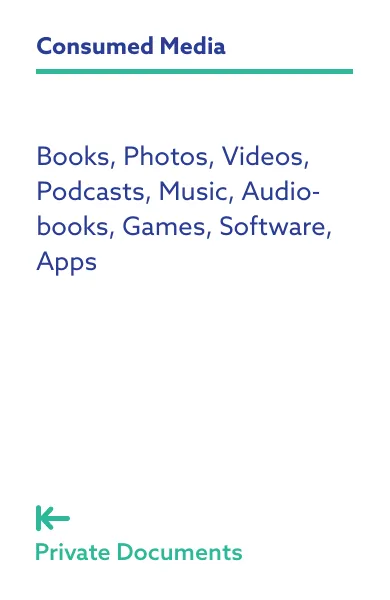
Cards for workshops in four categories: People, Ethics, Security, and Concerns. Used in Ideation, Data Sources, and Reflect.
Download ZIP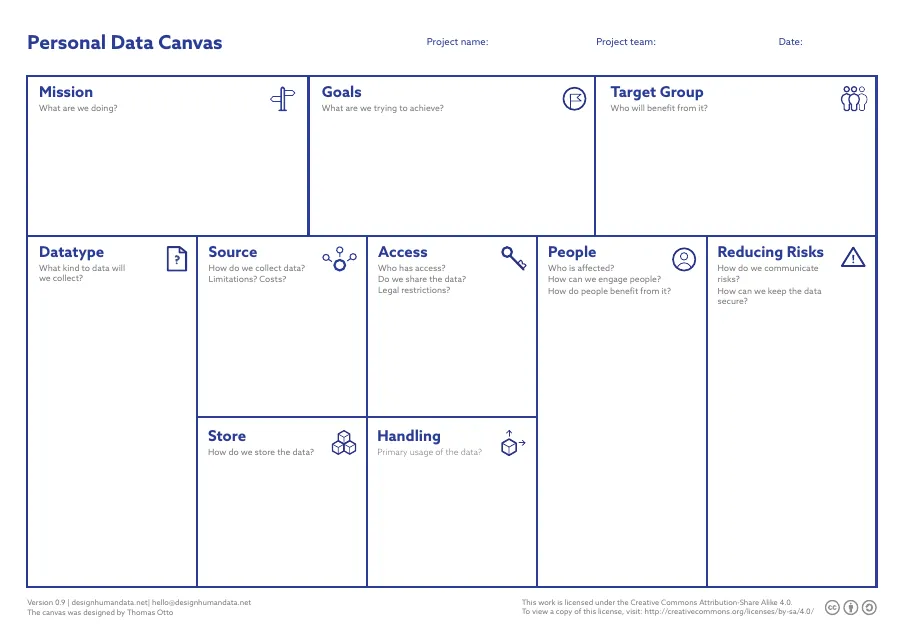
A2 landscape
A one-sheet framework to map a feature from initial idea to data storage and handling. Used in Frame, Create, and Reflect.
Download PDF
A2 portrait
How sensitive personal data is, from public to personal, and the care each level needs. Used to Estimate Data Value.
Download PDFThis site loads its typefaces from Adobe Fonts, which receives your IP address. Visits and downloads are counted with Pirsch, without cookies. Neither loads unless you agree. Change it any time under »Privacy settings« in the footer. Privacy policy